Curiousity, Responsibility and “The Little Prince”

On ne voit bien qu’avec le coeur.  L’essentiel est invisible pour les yeux.”

“It is only with the heart that one can see rightly.  What is essential is invisible to the eye.”

From “The Little Prince”
by Antoine de Saint-Exupéry

A few weeks ago on Twitter, the writer Susan Orlean started the topic #booksthatchangedmyworld.   The topic became hugely popular within seconds and is still active.  Mostly fiction titles were mentioned, although non-fiction books, such as, “Toxic Parents,” “The Joy of Cooking,” and “The Joy of Sex” were popular, too.

I added a few of my own, but the titles that came to my mind were children’s or young adult lit:  “Where the Wild Things Are” by Maurice Sendak and “Are You There, God? It’s Me, Margaret” by Judy Blume.

I could fill a few pages with a list of the books I love or books that affected me in a deep way, but the books that changed my life are mostly books I read when I was  young.

Today, I thought of a book that bridges the gap.  “The Little Prince” by  Antoine de Saint-Exupéry, is a children’s book that I read as an adult and it changed my life.

It was written as a children’s book, but its ideas of open-mindedness, curiosity, and exploration have a lot to teach adults who might have grown up and away from those child-like traits that keep the world new and exciting.

There are two parts that changed my world and have stayed with me since reading the book for the first time 15 years ago.  One is about our responsibility toward others.  The fox tells the Little Prince, who has fallen in love with a rose:

“Men have forgotten this truth, but you must not forget it. You become responsible for what you have tamed.  You are responsible for your rose.”

The second lesson is the quote at the beginning of this post.  It’s  the fox speaking to the Little Prince again.  “What is essential is invisible to the eye.

Reading that in the simplistic terms, the fox is saying the eye doesn’t see what matters most, it only sees what’s on the surface, but it goes beyond that.  It taught me that it’s important to dig deeper.  By examining, exploring, and questioning, I could learn what is essential to me, what matters most.  That lesson is something that changed my world in incalculable ways.

Happy birthday to Antoine de Saint-Exupéry, born June 29, 1900. The link is to his official website, which is in French.  Use Google Translate to translate it into any language. Très facile!

Making New Books from Old

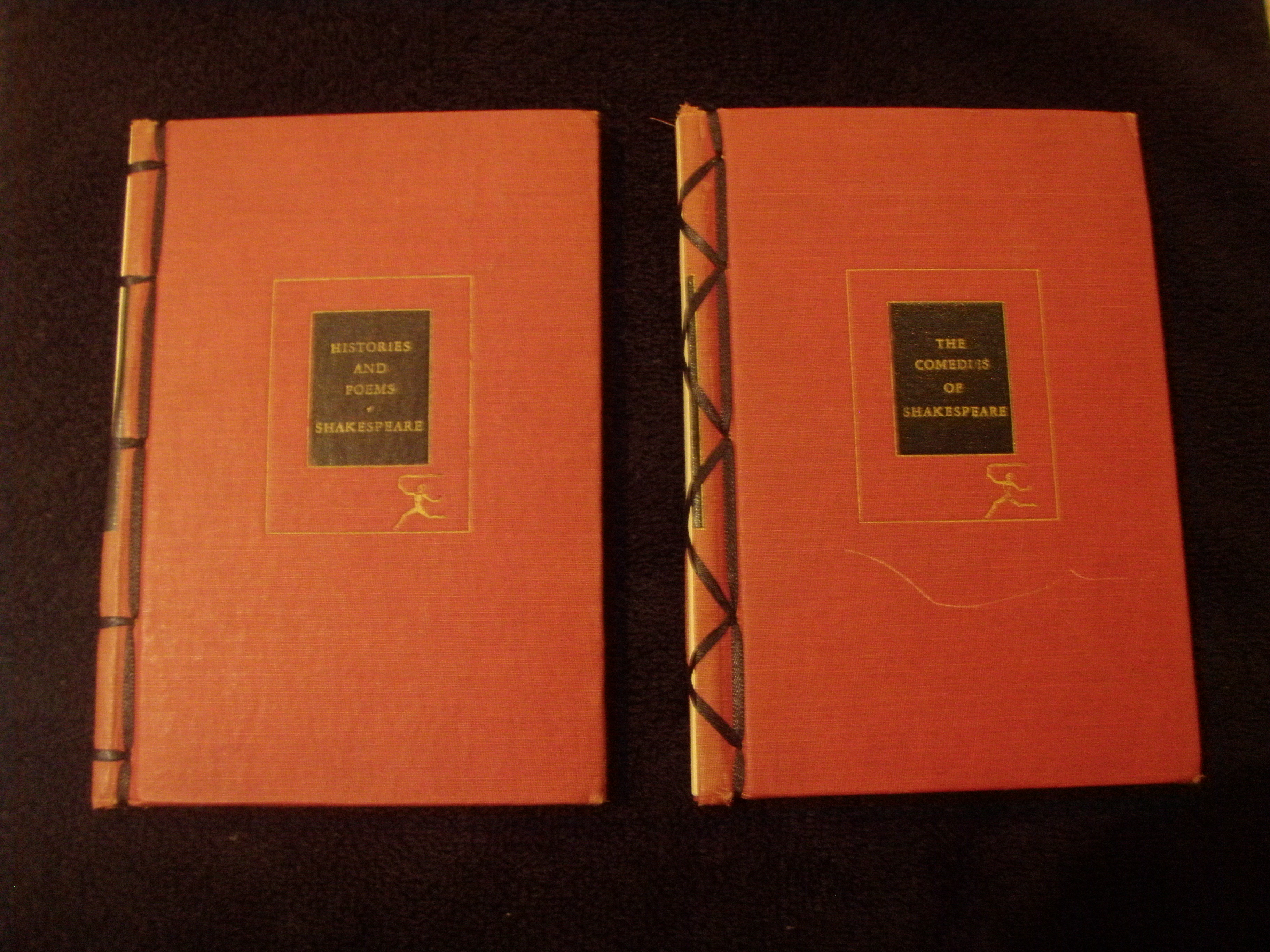
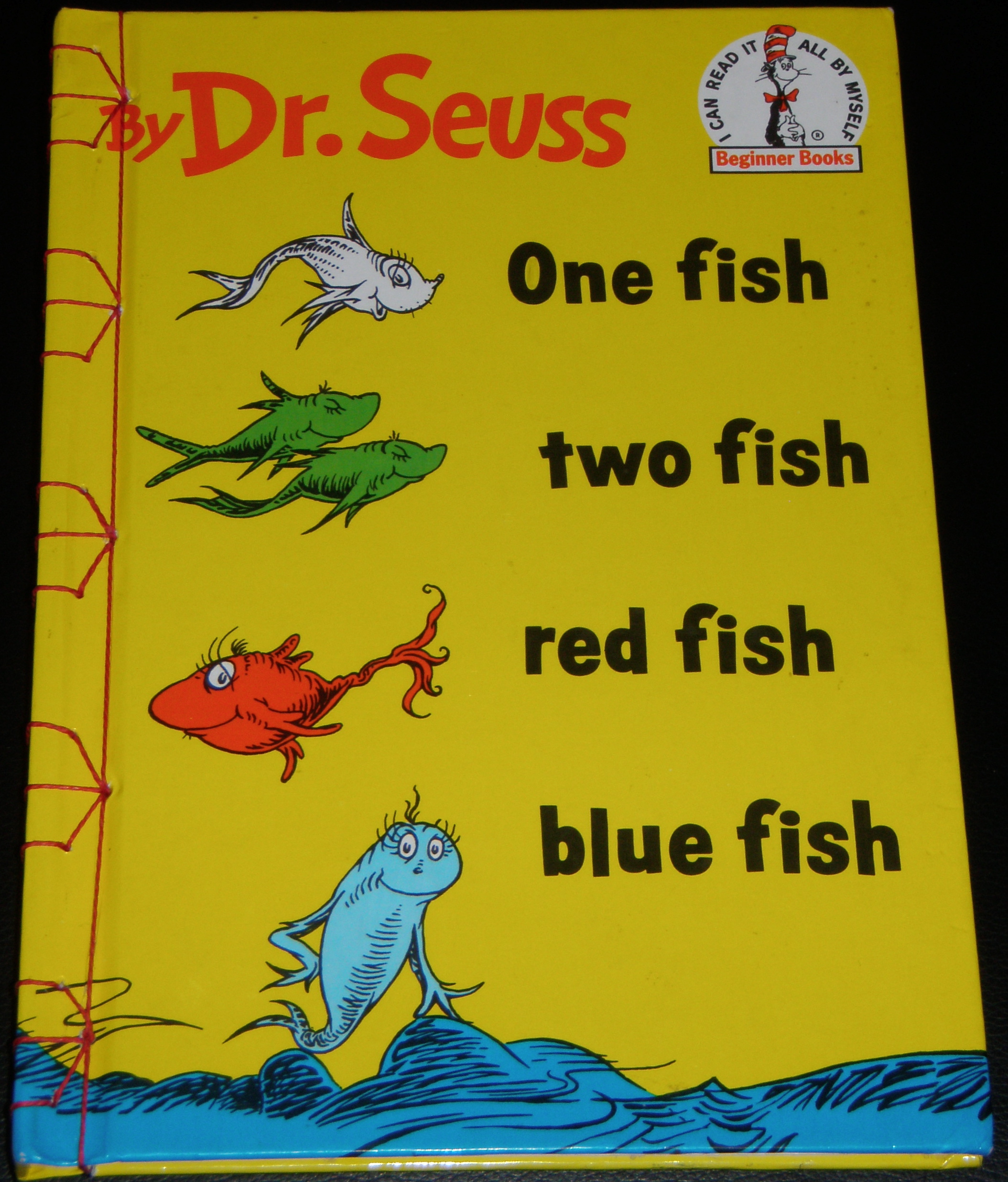
Shortly after I started making handmade books, I decided that I’d make one for everyone in my family for Christmas.  I was managing a used bookstore at the time and had access to hundreds of books that were destined for recycling.  I was happy to save them and give them new life as journals.

The Neil Diamond journal is from an album cover.  I made that one for my Mom, who is a huge fan.  She’s on a first name basis with him, even though they’ve never really met.  Aside from Neil, I tried to pick covers that were somehow connected to the recipient.

Unfortunately, I didn’t photograph them all, but the binding stitch has very little variation.  I used the Japanese stab binding stitch.  As violent as that sounds, it’s called stab binding because you have to punch a hole through the covers and all the sheets.

For instructions on doing this yourself, see this online tutorial from Amphian Photography.

(Where are the) Great Fathers in Literature

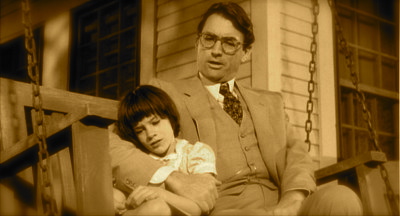
Gregory Peck and Mary Badham as Atticus and Scout Finch in “To Kill a Mockingbird.”

For Father’s Day, I want to write about great fathers in literature.

The first one who comes to mind is Atticus Finch, from “To Kill a Mockingbird.”

Great dad. He is honest, ethical, compassionate, and he teaches his children these qualities by example, by his actions and decisions, rather than by rote.

After Atticus Finch, there’s … ummm.  There’s, uh…  Hmm.

Okay, let’s talk about bad dads. There are plenty of those.

  • Bull Meecham from “The Great Santini” by Pat Conroy, is a tyrannical and dangerous father, whose abuse severely damages his family and nearly destroys them all.
  • In Shakespeare’s “King Lear,” the King’s pompous ego and his favoritism of Cordelia over her sisters, leads to her murder and his.
  • Willy Loman from “Death of a Salesman” by Arthur Miller, misleads his sons on lessons of life and love.  He is so deluded about his own success and his life, that his death is not a tragedy so much as it is an epic failure.
  • Disney Dads, like those of Cinderella, Sleeping Beauty, Belle, Ariel, and Jasmine, are either absent or too hapless to do anything for their daughters.

All right, this isn’t the optimistic sunshiny Father’s Day tribute I had envisioned, and I’m finding it a little depressing that fathers are not very well represented in books.  So, I’m going to wrap this up and go make myself a Father’s Day margarita in honor and in memory of a true classic, Manny Tejeda, my Dad, who was not absent, hapless, deluded, egotistical, or tyrannical.

He taught me by example; he was honest, ethical, kind, generous, and funny-funny-funny.  He was tough, too.  Some of his expectations were more than I could achieve, or so I thought back then, but everything … all of it, was wrapped in knowing, absolutely, that he loved me.  Like all good classics, his influence lives on.

Happy Father’s Day!

Can you help a daughter out?  I’d love to list more good literary fathers, but I can’t think of any and would love some input.  He doesn’t have to be from the classics or popular fiction.  I’ll take anything at this point.  Dads deserve it!

What the Wild Things Started

Max, the king of all wild things

My life-long love affair with books began with Maurice Sendak’s “Where the Wild Things Are.” As I look back now, I realize it wasn’t just the book that drew me in, but the experience that surrounded discovering it.

I was eight years old and attending a new school, a public school, and for the first time ever, I would be attending a school where I wasn’t related to anyone.

Kindergarten through second grade were spent at the heavily Catholic, heavily Italian, Sacred Heart School, which was populated in my class alone by two cousins, and outside my class by one brother, nine other cousins, three aunts who were related and at least four “aunts” who weren’t. My mom was a class mother and even Sister Catherine Michael, my first and second grade teacher, seemed like family since she came to Sunday dinner most weeks.

In that cloistered world, I thought I was related to everyone, and I never imagined that there might be a world away from those many eyes that watched everything I did.

On my own in a new school I was nervous at first, afraid of the strange surroundings. After a day or two, my nervousness settled down, and I started having the tiniest feelings of independence and the freedom that came along with it. As a compliant little Catholic girl whose every move had been monitored, I had no idea what to do with those feelings, and I wondered what Sister Catherine Michael would say.

That’s when I had the chance to explore the school library for the first time. I didn’t know what I was supposed to do there; my old school didn’t have a library, so I just followed the other kids. I walked in and out of aisles and almost over a shelf to “Where the Wild Things Are.”

I saw a classmate leafing through the pages and it looked fascinating to me. I asked God to make her put it down so I could look at it. God answered my prayer that day, even before I started a novena. I said my silent thank you and picked up the book for myself.

The art on the cover drew me in (and still does), and I couldn’t wait to turn each page to see what happened next. Maurice Sendak’s drawings amazed me, they were rich, moody and dark, and they perfectly illustrated the story of Max, the wildly, mischievous boy, who jumps off the pages and shouts, “Let the wild rumpus start.”

Max was exactly what I needed. I was a passive, obedient, timid child, but Max sailed treacherous seas, he swung from high branches and tamed wild beasts. From him, I learned that I didn’t have to be afraid of the world outside my door. I learned that sometimes I could do what I wanted, instead of what someone told me, and that I didn’t have to pray for forgiveness every time I misbehaved.

Throughout my life, I’ve had my Max moments of wild adventure and reckless abandon, but I never quite reached his level of daring. I didn’t need to. What I needed was the lesson Max taught me in the pages of that book, and the thousands of other lessons I’ve learned in the pages of thousands of other books that have pulled, pushed, tugged, roared, and forced me through my own rumpus.

Nearly forty years later, books are still my passion, and I’m still not sated. I’m a reader, a writer and a book-maker, and it all started when Max reached out from that library book and pulled me into his wild world.

Thank you for reading! I’m getting ready to submit this as part of a collection of creative non-fiction. It’s different from the other pieces, and I worry that it might be too sappy or come off as insincere. I’d love some input!

June 16: It’s Bloomsday Yes it is Yes Enjoy Yes

Today is Bloomsday, June 16, the day all the events in James Joyce’s Ulysses take place.

Named for main character Leopold Bloom, Bloomsday is celebrated by Joyce fans around the world, with a huge celebration in Dublin, where the book is set.  Fans spend the day honoring Joyce, reenacting scenes from the novel, and generally having a wild time.

Molly Bloom, Leopold’s wife is lusty and seductive, even crude in comparison to Leopold’s more cerebral nature.  Both Blooms have had affairs and at the end of the book they continue to question the value of their marriage.  Yet in Molly’s 24,000 word unpunctuated stream of consciousness soliloquy that ends the novel, it’s hard to deny the joy she finds at the hands of her husband.

In honor of Bloomsday, the final words of Molly’s soliloquy:

… Yes when I put the rose in my hair like the Andalusian girls used or shall I wear a red yes and how he kissed me under the Moorish wall and I thought well as well him as another and then I asked him with my eyes to ask again yes and then he asked me would I yes to say yes my mountain flower and first I put my arms around him yes and drew him down to me so he could feel my breasts all perfume yes and his heart was going like mad and yes I said yes I will Yes.

Happy Bloomsday, everyone.  Yes?

Happy Birthday to Anne Frank and her Diary

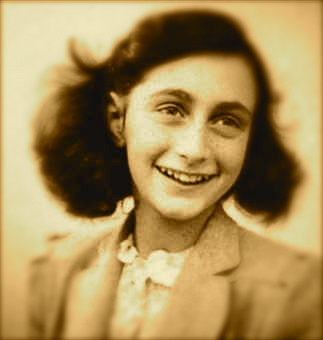
On June 12, 1942, 68 years ago today, Otto Frank gave his daughter, Anne, a diary for her 13th birthday.

Anne began a chronicle of her life that day and wrote most of her diary in hiding at the Secret Annex, a tiny hidden compartment behind a bookcase at her father’s office, where her family and four others were forced into hiding from the Nazis.

Anne wrote about the difficulties of living with eight people in such a confined and secret space. She shared her fears of being discovered by the Nazis.  And she wrote about her life as any 13 year old girl would, the excitement and confusion, the hopes and disappointments.

Anne’s dairy ended on August 1, 1944.  Three days later, the German Security Police followed an anonymous tip and raided the Secret Annex arresting everyone there.  Anne, her sister Margot, and their mother Edith were eventually sent to Auschwitz along with one thousand other women.  Half were sent directly to the gas chambers.  Anne, Margot, Edith, and the remaining 500 were forced to strip and be disinfected, have their heads shaved and their arms tattooed with an identifying number.

Edith died at Auschwitz after Anne and Margo were moved to Bergen-Belson.  Seven months later, Anne watched her sister die of typhus.  She died one week later, just a few weeks before the camp was liberated by British troops on April 15, 1945.  Only Anne’s father survived.

The Diary of a Young Girl, Anne Frank’s diary, has been translated into 67 languages and is one of the most widely read books in the world.

Its importance is noted in its inclusion on these lists:

Anne’s work speaks for itself.  It puts a human face, a young girl’s face, on the unimaginable suffering of the Holocaust.  We are graced by it because Anne Frank put her words on paper.

Writers: When Inspiration Sags, Hit the Books

One of the many joys of being a writer is finding something that moves you so deeply that you’re inspired to write.  What happens, though, when that initial flush fades, and you’re far from finishing what you’ve started?

Staying motivated is a challenge writers face daily.  As a world-class procrastinator, I can find hundreds, okay, thousands of diversions that keep me from writing.  Sometimes just the process of getting started inspires me, but I’m not always so lucky.  When I’m feeling particularly stagnant, I turn to my favorite books to push me forward.

Dennis Tafoya, author of DOPE THIEF and the soon to be published THE WOLVES OF FAIRMOUNT PARK also finds inspiration in books.  On his blog, Dennis Tafoya’s Bad Neighborhood, he has started sharing info on books that have taught him something about writing.

He starts his Books That Teach series with SAVE ME, JOE LOUIS by Madison Smartt Bell and explains what the book taught him.  He also asks for input.  Please visit Dennis’ site and share your favorites.

Can you guess which author I included?  Hint: His first name is Philip and his last name is Roth. (Hi Philip! Love you!)

Need a different inspiration boost? Join The Silent Writers Collective on Tuesdays at 9 PM Eastern (US) for the next Silent Write-In.

Lit Bit: March 28, Nelson Algren

Nelson Algren won the first National Book Award for "The Man with the Golden Arm."

Unless you live in Chicago, you probably don’t hear much about Nelson Algren anymore, and that’s too bad.

The Chicago writer would have been 101 years old today, and it’s likely he wouldn’t be surprised by his obscurity.  Even at his most popular, after winning the first National Book Award for The Man with the Golden Arm, and earning the praises of Ernest Hemingway, Simone de Beauvoir, and Richard Wright, among others, critics either ignored or condemned him.

His subjects, his voice, his own personality was not as polished and presentable as other writers of his day, but he wrote what he knew.

Algren grew up in Chicago, where most of his stories are set in the city’s seedy underside. His subjects were equally dark: Drug addiction, racism, poverty, crime. He wrote of junkies, pimps, prostitutes, and grifters. He addressed pressing social issues long before it was fashionable, and he wrote about them with an authentic, strong, unforgiving voice that brought his characters to life and still rings true.

Algren’s black humor novel A Walk on the Wild Side is the story of Dove Linkhorn, a naive Texan who travels to New Orleans to find his lost love, Hallie, who turns out to be a prostitute. This novel is often called Algren’s masterpiece. He describes it this way,

The book asks why lost people sometimes develop into greater human beings than those who have never been lost in their whole lives.

Lou Reed’s song about male prostitutes and transvestites, Walk on the Wild Side was inspired when Reed was approached to write a musical version of Algren’s novel, which never materialized.

While critics weren’t kind to Algren, the city of Chicago actively berated him, saying his characterization of the city was grotesque and exaggerated. The city held a grudge, too.

After Algren died on May 9, 1981, when Chicago’s West Algren Street was named in his honor, the residents complained so much that the name reverted back to West Evergreen Street. Even the Nelson Algren Awards, an annual writing contest for short fiction created by the Chicago Tribune was discontinued after a few years.

Algren died on May 9, 1981, and by 1989 all of his work was out of print.  Thankfully, The Nelson Algren Committee founded by Studs Turkel changed that and Algren’s work has been available print ever since.

I’m inspired by Nelson Algren, by his writing, by his voice, and by his commitment. He wrote what he knew with brutal honesty. It wasn’t the fast path to celebrity or success, but through the years he has finally gained the respect he sought. He’s not remembered or read as often as Hemingway, Faulkner, or Fitzgerald, but he’s still read and that’s a testament to his dedication and his talent.

There’s Just Something About a Quote

…They are tiny flashes of inspiration, illumination, humor, hope. After reading one that resonates, I feel a connection, not just to the writer, but to the world. It’s a shared experience that reminds me I’m not alone out here. So for that reason, I created this page: To share some of that “inspiration, illumination, humor, hope” with you. See that? I just quoted myself!

Originally, I planned on including only quotes about writing, but I don’t want to restrict it that much. Those quotes will be included here, and will probably be in the majority, but I decided to also include any quote that floats my boat, as it were.

I invite you to add your favorites, of if you have a link to great quote site, add that, too.

To start things off, Woody Allen:

I don’t want to achieve immortality through my work. I want to achieve it through not dying.

Isaac Babel: No steel can pierce the human heart so chillingly as a period put just at the right place.

Hilaire Belloc: When I am dead, I hope it is said, “His sins were scarlet, but his books were read.”

Anton Chekhov: Don’t tell me the moon is shining; show me the glint of light on broken glass.

Jack London: You can’t wait for inspiration, you have to go after it with a club.

“Creative Writer” Blogger Award

Thank you to Anne Tyler Lord at Don’t Fence Me In for bestowing on me the dubious distinction great honor of Lesa’s Bald Faced Liar “Creative Writer” Blogger Award. I certainly appreciate the award, but my natural cynicism curiosity begs the question, Who’s Lesa, and why is she annoying liars awarding writers? A quick google tells me Lesa is a Library Manager and book reviewer living in Arizona… quite possibly within a few minutes of where I live. Cool coincidence. She started the award on January 22, 2010. Her post can be found here: The Inaugural Lesa’s “Creative Writer” Award.

In accepting the award, there are some rules to follow. This is I hope going to be a fun exercise and a nice little break from the fiction slog. But,

First: The Rules:

1. Thank the person who gave this to you. [Thanks again, Anne!]
2. Copy the logo and place it on your blog.  [Done]
3. Link to the person who nominated you. [Done]
4. Tell up to six outrageous lies about yourself, and at least one outrageous truth or six outrageous truths and one outrageous lie. [Coming up]
5. Nominate seven “Creative Writers” who might have fun coming up with outrageous lies and truths. [Stay tuned]
6. Post links to the seven blogs you nominate. [Working on it!]
7. Leave a comment on each of the blogs letting them know you nominated them.  [I’m getting there, I’m getting there]

Second: Lies and/or Truths:

Here’s my list. I’d love to know which ones you think are which. After some comments, I’ll tell you which one is the truth. Or is that a lie?

  1. I worked as an extra in Woody Allen’s movie Sweet & Lowdown and was called back for a walk-on role in Small Time Crooks.
  2. I jumped off the back of a moving yacht to save my dog.
  3. When things were going bad in my marriage, I used to spit in my husband’s dinner before serving it.
  4. It took me seven and a half hours to run the NYC marathon.
  5. At 12 years old, I was so superstitious that I was petrified of turning 13.
  6. Security at a Las Vegas casino detained and questioned me for over an hour on suspicion of cheating.
  7. I order veal and give it a name whenever I go out to dinner with my vegetarian friends.

Now, it’s time to share the love and award this honor to seven more  “Creative Writers.”  Sorry, gang, but now’s your time to shine.  To accept the award all you have to do is follow the rules.

Third: And the Winners Are:

  1. Dennis Tafoya at Dennis Tafoya’s Bad Neighborhood
  2. David G. Shrock at Draco Torre
  3. Cathy Olliffe at Life on the Muskoka River
  4. CJ Hodges MacFarlane at Mostly Other Things
  5. Tim Van Sant at otoh
  6. Cecilia Dominic at Random Oenophile
  7. Deborah Szajngarten at DeborahShinegarden.com

Okay, here are some truths … honestly! This took some time to put together, but it really was a lot of fun! Thanks again to Anne Tyler Lord.